OpenAI has accused Chinese AI startup DeepSeek of using its proprietary models to train a competing open-source model, potentially breaching intellectual property agreements. OpenAI claims that DeepSeek employed a technique called "distillation" to enhance its AI model by learning from larger, more advanced models, possibly violating OpenAI's terms of service. This situation highlights ongoing concerns about IP rights in the rapidly evolving AI industry.
Counterfeit Goods Seizures
On January 31, 2025, authorities in Dublin conducted raids targeting intellectual property crime, resulting in the seizure of suspected counterfeit Apple AirPod Max headphones, fake Otterbox mobile phone cases, luxury goods, and cash. Approximately 180 counterfeit headphones and 185 fake phone cases were confiscated, with estimated revenue losses of €104,400 and €5,500, respectively. This operation underscores the ongoing efforts to combat counterfeit goods and protect IP rights.
Enhancements in Patent Search Tools
The Intellectual Property Office (IPO) has introduced "One IPO Search," a new keyword search tool for its patent database. Unlike the previous system that required specific patent numbers, this tool allows users to find existing patents using specific keywords. This development is part of a broader digitization effort by the IPO to modernize its systems and support innovation by providing an easy-to-use platform for inventors and businesses.
Legal Settlements in Fashion Design
Elizabeth Emanuel, co-creator of Princess Diana's iconic 1981 wedding dress, has settled a legal dispute with her ex-husband and former business partner, David Emanuel. The case involved allegations of copyright infringement over drawings of the wedding gown and other designs. The settlement grants Elizabeth ownership of all intellectual property rights of the Emanuel partnership, allowing her to proceed with new projects.
AI and Intellectual Property Disputes
OpenAI has accused Chinese AI startup DeepSeek of using its proprietary models to train a competing open-source model, potentially breaching intellectual property agreements. OpenAI claims that DeepSeek employed a technique called "distillation" to enhance its AI model by learning from larger, more advanced models, possibly violating OpenAI's terms of service. This situation highlights ongoing concerns about IP rights in the rapidly evolving AI industry.
01 Counterfeit Goods Seizures
On January 31, 2025, authorities in Dublin conducted raids targeting intellectual property crime, resulting in the seizure of suspected counterfeit Apple AirPod Max headphones, fake Otterbox mobile phone cases, luxury goods, and cash. Approximately 180 counterfeit headphones and 185 fake phone cases were confiscated, with estimated revenue losses of €104,400 and €5,500, respectively. This operation underscores the ongoing efforts to combat counterfeit goods and protect IP rights.
02 Enhancements in Patent Search Tools
The Intellectual Property Office (IPO) has introduced "One IPO Search," a new keyword search tool for its patent database. Unlike the previous system that required specific patent numbers, this tool allows users to find existing patents using specific keywords. This development is part of a broader digitization effort by the IPO to modernize its systems and support innovation by providing an easy-to-use platform for inventors and businesses.
03 Legal Settlements in Fashion Design
Elizabeth Emanuel, co-creator of Princess Diana's iconic 1981 wedding dress, has settled a legal dispute with her ex-husband and former business partner, David Emanuel. The case involved allegations of copyright infringement over drawings of the wedding gown and other designs. The settlement grants Elizabeth ownership of all intellectual property rights of the Emanuel partnership, allowing her to proceed with new projects.
These events reflect the dynamic nature of intellectual property law and its critical role in various industries, from technology to fashion.
Patent Disputes in the Pharmaceutical Industry
Recent legal battles in the pharmaceutical sector have highlighted the growing importance of intellectual property protection for drug manufacturers. In early 2025, a U.S. court ruled in favor of Pfizer in a patent dispute against a generic drug manufacturer, reinforcing the company's exclusive rights to its best-selling medication. The case underscores the ongoing struggle between brand-name pharmaceutical companies and generic manufacturers over patent expirations and market competition.
AI and IP conflicts
Counterfeit crackdown
Patent search upgrade
Big pharma patent disputes
The Saudi Intellectual Property Rights Company has announced the launch of its digital platform, IP ORA, a step that reflects the company’s direction toward developing specialized technology solutions for the intellectual property sector. The platform combines professional and technical expertise to simplify the management of intellectual property rights and related procedures for companies, groups, intellectual property firms, and law firms. This article explains why the platform was launched, what it brings together in one place, and who it serves.
Why IP ORA? The Operational Needs of IP Portfolios
The launch responds to growing operational needs in managing intellectual property portfolios. Managing a portfolio calls for continuous follow-up on several aspects, including:
Registrations of rights and their renewals.
Applications and their stages.
Documents associated with each right.
Statutory deadlines.
Coordination among specialist teams and follow-up on procedures at each stage.
As these aspects multiply and the work on them is shared across more than one team, the need for a tool that helps organize and follow them up grows.
What IP ORA Brings Together
IP ORA brings the core aspects of intellectual property rights management into one platform:
Portfolio and Registration Management
Managing intellectual property portfolios.
Organizing trademark registrations and other rights.
The IP ORA portfolio: trademarks, patents and industrial designs in one register
Application Monitoring
Tracking registration applications.
Tracking renewal applications.
Tracking oppositions.
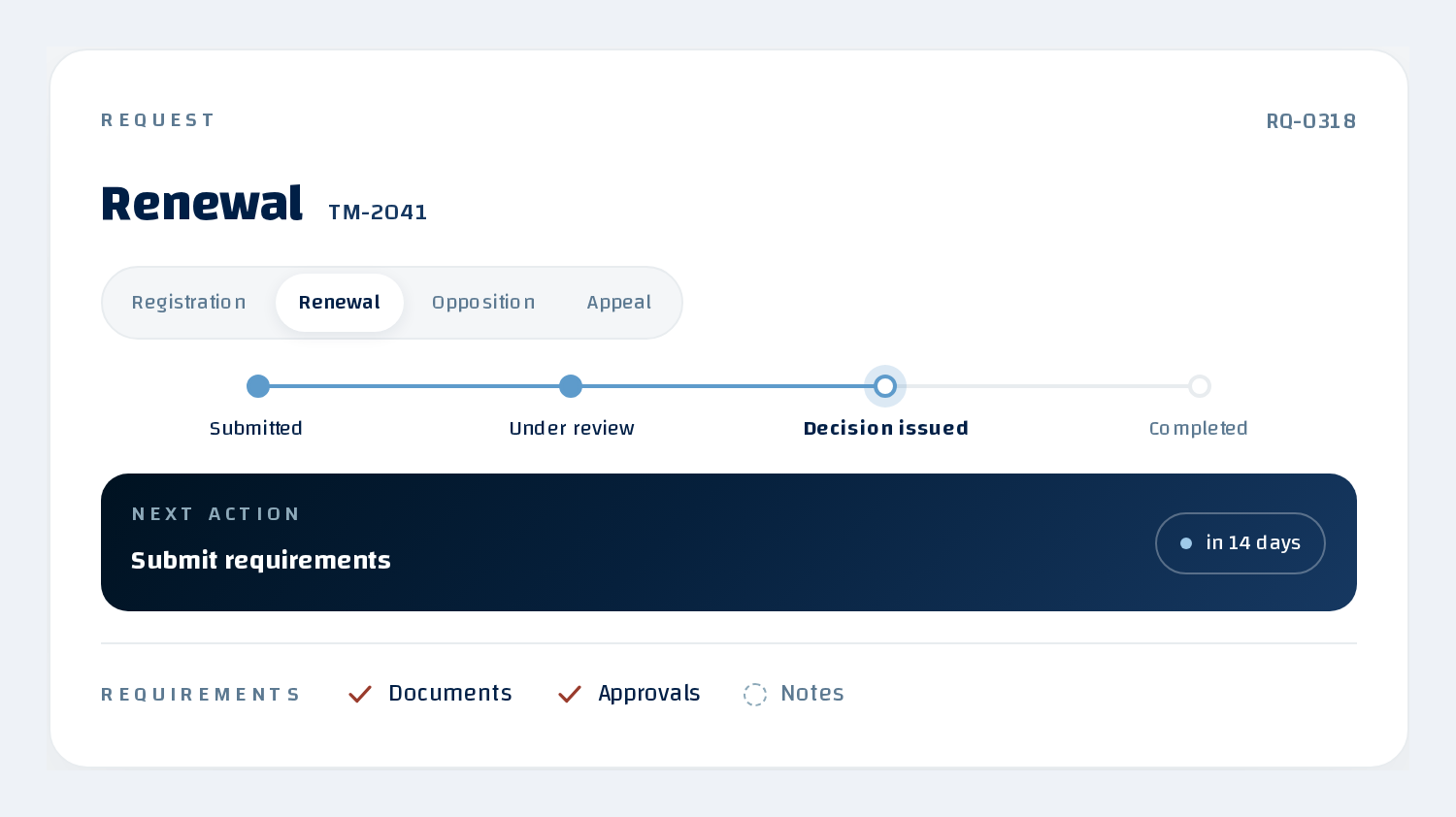
Following a request through its stages, from submission to decision
Documents, Deadlines, and Procedural Records
Managing documents and certificates.
Tracking deadlines and application statuses.
Keeping procedural records associated with each right.
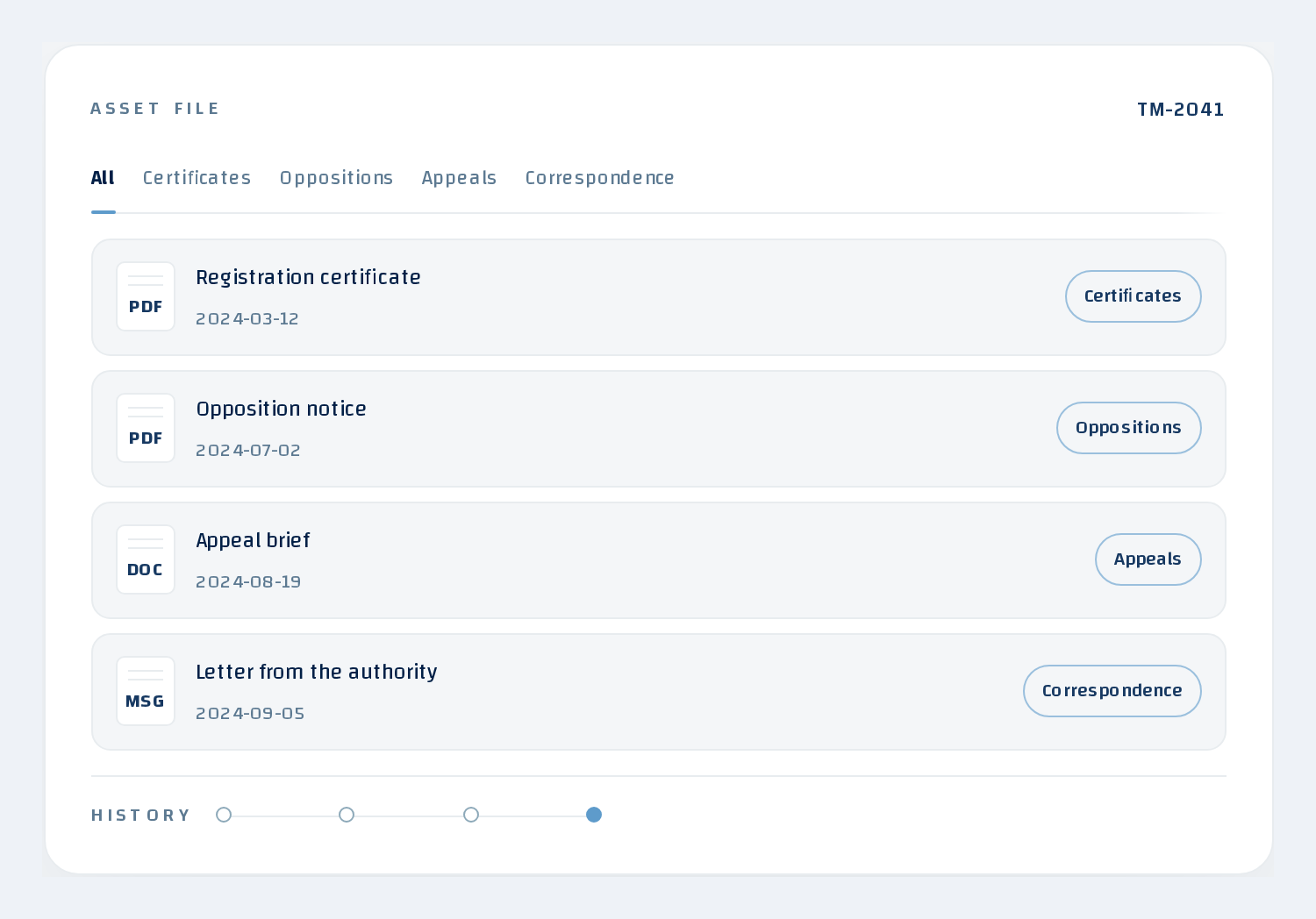
The asset file: certificates, oppositions, appeals and correspondence linked to the right
As a result, the documents, deadlines, application statuses, and procedural records linked to each right are tracked in the platform.
Workflow, Reports, and Trademark Monitoring
Beyond holding the data, the platform supports the day-to-day work around it through:
Workflow and task organization for intellectual property applications.
Reports provided through the platform.
Trademark monitoring tools within the same platform.
Together, these help departments and specialist teams organize their work, access file data, and follow related procedures from one place, whether for registration applications, renewals, or oppositions.
Who IP ORA Is For
The platform is designed for organizations that manage intellectual property rights and follow their procedures, including:
Companies and groups: to organize their trademarks and other rights and keep track of renewals and documents.
Intellectual property firms: to follow registration, renewal, and opposition applications and organize tasks across teams.
Law firms: to track procedures, statutory deadlines, and the procedural record of each right.
What these organizations share is the need for continuous follow-up on rights, applications, and statutory deadlines, and for coordination among specialist teams at every stage: the needs the platform was launched to address.
Built on a Specialized Understanding of IP Work
IP ORA was developed based on a specialized understanding of the nature of intellectual property work and the accuracy it demands in three areas:
Tracking rights.
Tracking applications.
Meeting statutory deadlines.
The result is an experience that combines data management with the related professional processes and procedures, so file data and the work carried out on it sit in one place.
Explore IP ORA
IP ORA enables interested organizations to explore specialized digital solutions for managing intellectual property rights, and to learn about the platform’s capabilities and how well it suits the management of their portfolios and professional procedures. This extends the company’s direction toward developing specialized technology solutions that bring professional and technical expertise to the intellectual property sector.
To learn more about IP ORA and explore its capabilities, contact us.
Authors of the article:
Share it with the world!
Our latest news
Stay up to date with the latest news and developments in the field of intellectual property by following the Intellectual Property Blog
.svg)